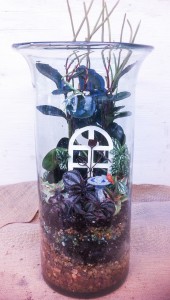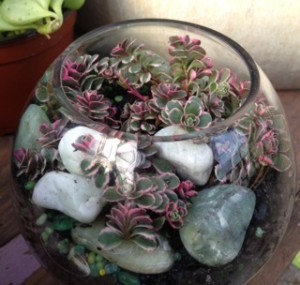
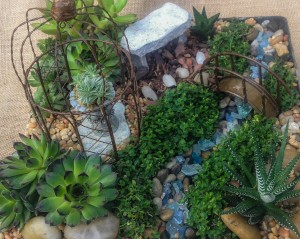
A succulent miniature garden…
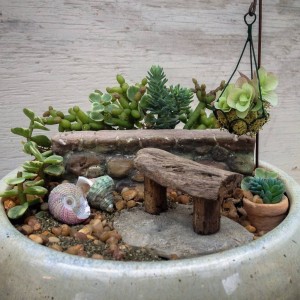
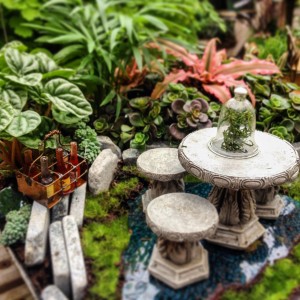
The miniature gardening trend continues, and we’re sure having fun with it. From tiny gardens in glass terrariums to a saucer planted with driftwood and a place to sit along the “water”, these little gardens spark the imagination of gardeners of all ages.
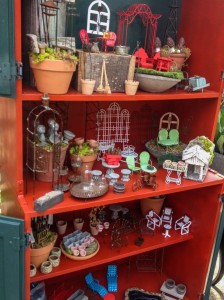
Tiny temptations…
Two 20-something women walked in the other day, and one of them immediately spotted the miniature garden display. “Oh, look!”, she said excitedly. “Aren’t these cute?” Her friend was skeptical. “Uh, sure…”, she answered. “Whatever you say.”
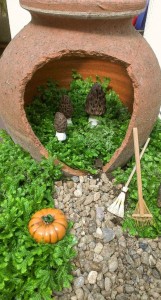
Tending a tiny garden…
Not swayed by her friend’s decided lack of enthusiasm, the first started looking through the miniature accessories, oohing and aahing at each tiny piece.
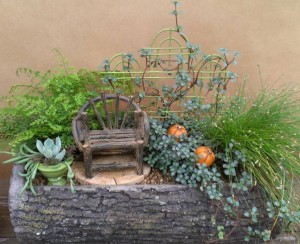
A cozy spot to sit…
“I want to make one of these gardens!”, she declared. Her friend walked closer and looked at the pieces she had in her hand. “You should have a bench.”, she stated. “And look at this tub with wine bottles in it. That would be really cute, wouldn’t it?”
As I listened to them, it became quite clear that the skeptical one (I was beginning to call her this in my head.) was being completely drawn into the fun of creating a tiny world with her friend.
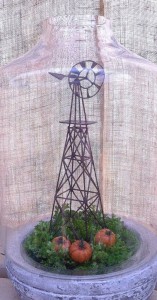
A pumpkin patch under a windmill…
I walked up and started talking with them, asking if they had any questions about the miniature gardens.
The first one again said she wanted to make one and asked if I would help her because she thought it would be so much fun. “Of course.”, I said. “It’s summer and pretty slow, I think we could put something together for you today.”
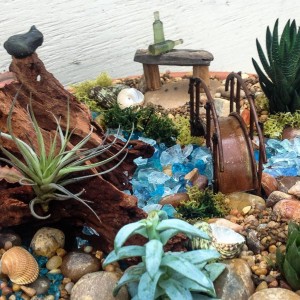
On the other side of the bridge…
Unfortunately, I don’t have pictures of the garden she made with a lot of helpful suggestions from her friend, but I can tell you it turned out really well. A red Adirondack chair, the tiny tub with iced drinks, a beach along the water, some succulents planted in strategic places, and – Voila! – a miniature garden completed.
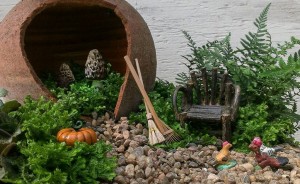
Little chickens…
Soon new miniature garden accessories will be arriving, including tiny gourds and white pumpkins for fall gardens…and scarecrows too.
Meanwhile, the pictures here show some we’ve planted this summer using a windmill, tiny chickens (Everyone loves chickens!), little wooden chairs, driftwood benches, morel mushrooms, and more.
Maybe it’s time to let your inner child out…or create a miniature garden with your children. You just might get caught up in the magic like my friend, the skeptical one at the start of this post!
As with any container garden, these are designed to last as a true garden. Be mindful of the amount of light your garden will receive when you choose your plants. There are many houseplants that work well together, including fittonia, Neanthe bella palms, and many ferns. Succulents work well in higher light and will need less water. Haworthias, aloes, crassulas and sedums are just a few of the many succulents you can use. Have fun!
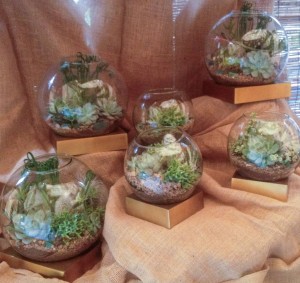
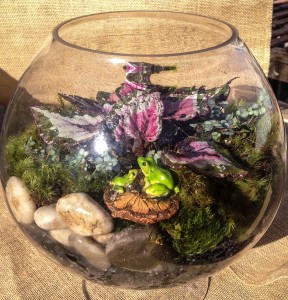
 Since these terrariums are open at the top and the store gets plenty of light,
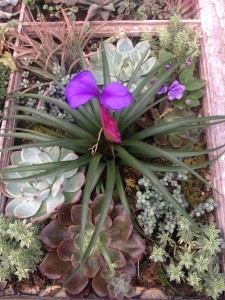
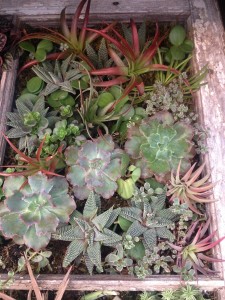
 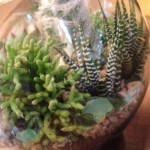 Some of the plants used include: Rhypsalis, various Echevarias, Albuca spiralis, Cactus, Haworthia, various Tillandsias, and Portulacaria afra, sometimes called a miniature jade plant.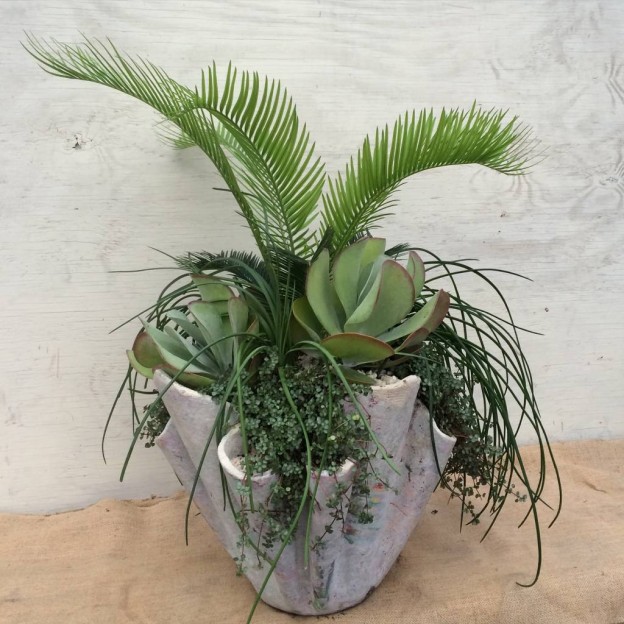
 While parts of the country are enjoying an unusually cool summer, here in the heart of the south the temperature and humidity can still soar. Unfortunately, even nighttime temperatures rarely provide respite from the unending heat, though, thankfully, we (and our plants!) have had a couple of welcome breaks this year.
 While there are plenty of
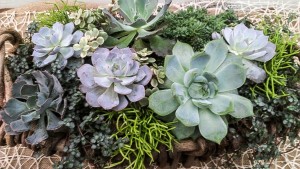 The basket planting shows a tiny leaf blue-green succulent-like plant that is actually a Pilea called ‘Aquamarine’. It has fast become a favorite for succulent and other arrangements in containers. The tiny leaves grow quite quickly, mingling with other plants and eventually trailing, seemingly indefinitely! This mixture also has echevarias, workhorse succulents that can grow to enormous proportions.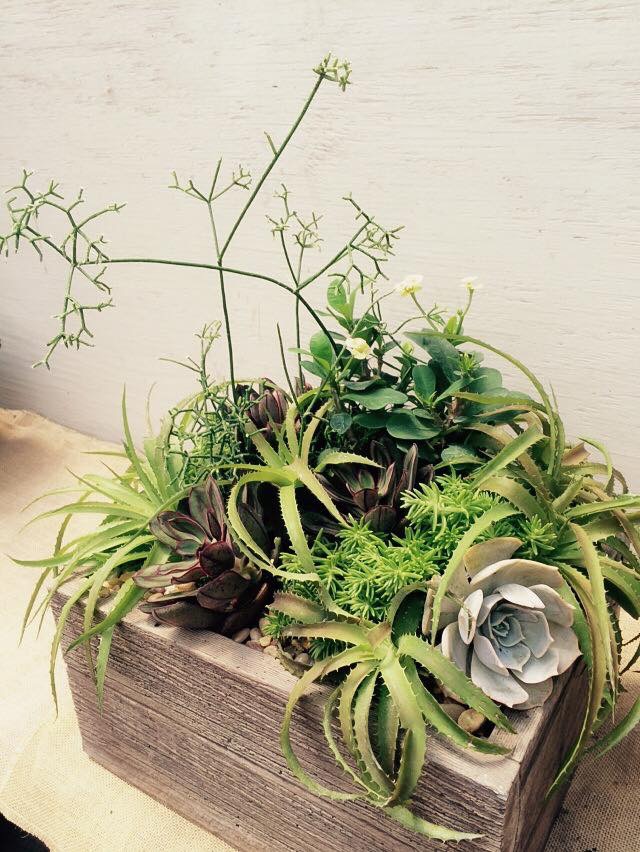
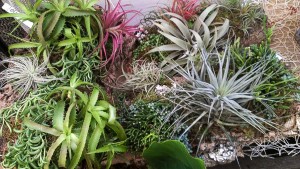 Succulent plants and
 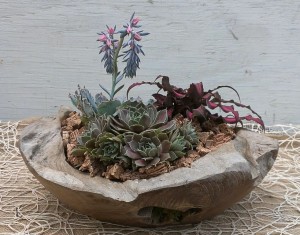 The wooden bowl shows an old favorite, sempervivum or hen and chicks, a well known succulent and widely available in many rosette colors. One thing we’ve learned about “semps” is they really do appreciate a bit of shade in the afternoon here in Birmingham. Maybe it’s our constant humidity. At any rate, a touch of shade seems to help.
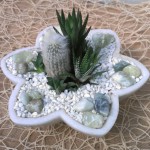 Another cactus called ‘Old Man’ and a little succulent called Haworthia are at home in a small marble container. There are no drainage holes in this piece, so careful watering must be done sparingly.
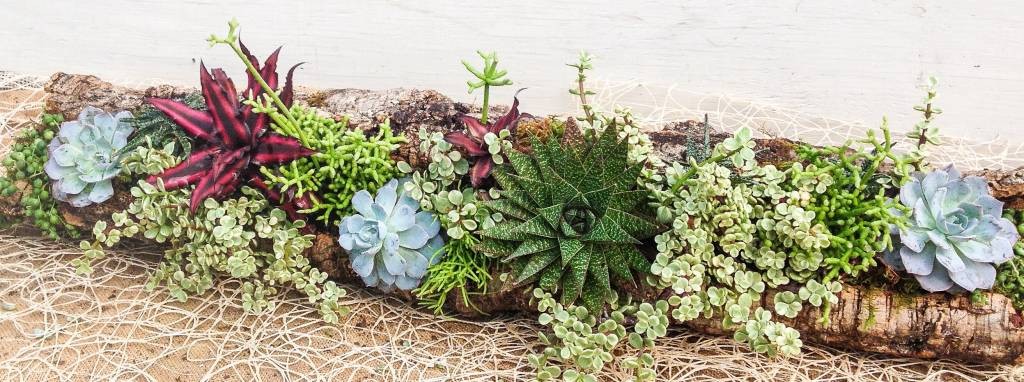
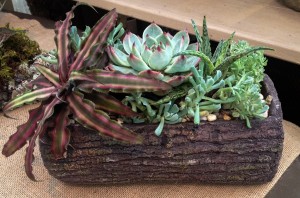
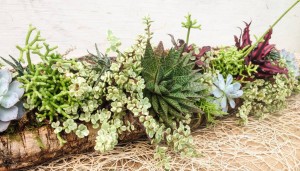 Finally, a long, very narrow piece of cork bark is home to a varied selection of succulents including Portulacaria afra, sometimes called miniature variegated jade plant though it’s a different species. Its small, cream-variegated leaves on reddish stems are striking combined with the echevarias, haworthias, Cryptanthus, and Senecio rowleyanus or string of pearls (not shown in this picture). With bright light and a light hand with water, this planting should flourish.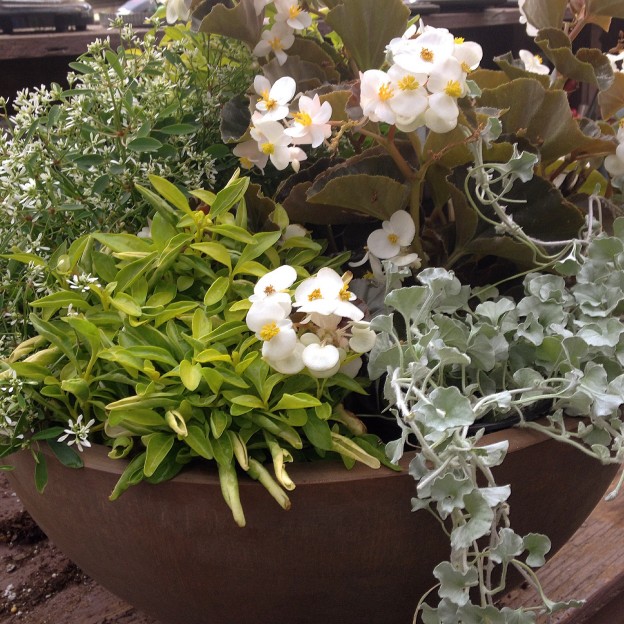
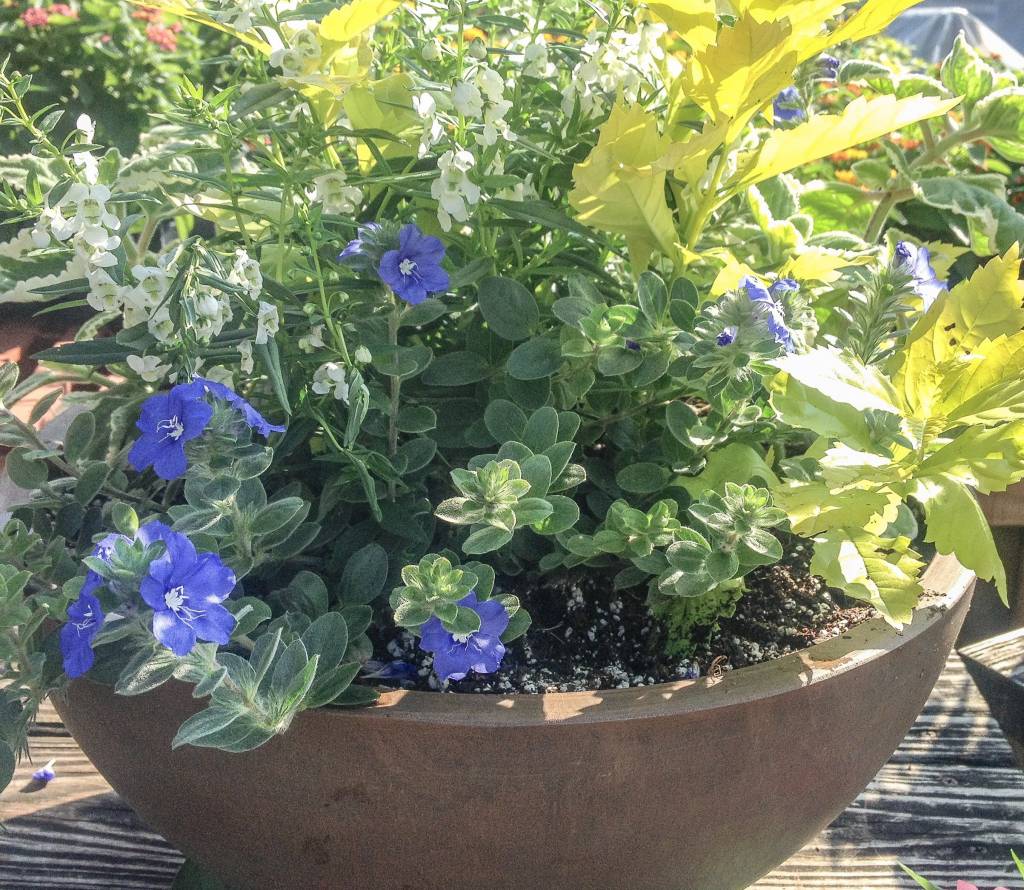
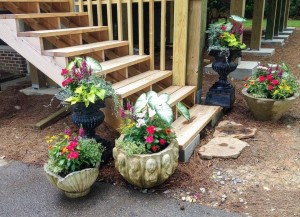
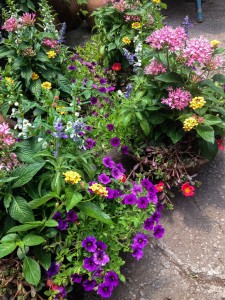
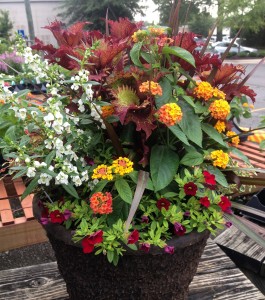 Many of the container plantings we do are in light, mâché pots that can either be used on their own or placed in another planter. Here’s one with a mix of sun coleus, a dracaena (Barely visible in this picture, it adds a spiky leaf.), lantana, red million bells to trail, and a white angelonia. This planting will get much larger and fuller as the heat of summer settles in, and daily watering will be necessary.
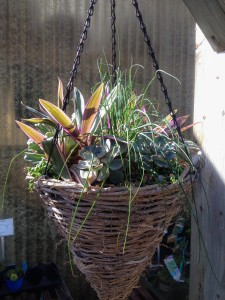 The white, cone-shaped hanging basket shown here is now home to a common houseplant, an herb, and some succulents. While it may seem an unusual combination, it’s working quite nicely and has a cool, summery look. The houseplant is a pink and green tradescantia (It’s also known as Rhoeo spathacea.), sometimes called Moses In The Cradle.
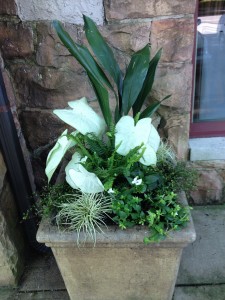
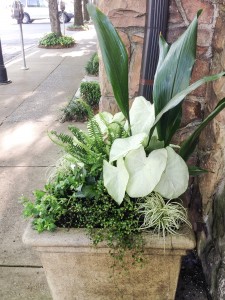
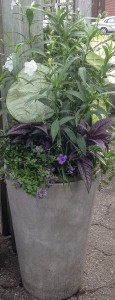 We have a few tall, lightweight planters still available, and this planting shows one of them off. A tall, white ruellia (They’re sometimes called perennial petunia.) is combined here with a caladium whose leaves will get very large. The name of this one is ‘Garden White’, and it’s impressive! The large leaves will contrast nicely with the smaller leaves of the ruellia. Another foliage contrast is provided by the silvery-purple leaves of a strobilanthes, sometimes called Persian Shield. A beautiful foliage plant, it benefits from a cutback every now and then if it gets to lanky in the planting. To trail there’s a blue fanflower, scaevola.
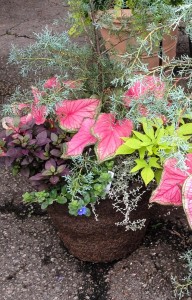 Finally, since we had a few ‘Carolina Sapphire’ cypress left, they were candidates for a planting using smaller plants at the base to add fullness, color, and trail. These planters will be in the sun and can be changed out in the fall with the addition of pansies and other cold weather plants for the winter season.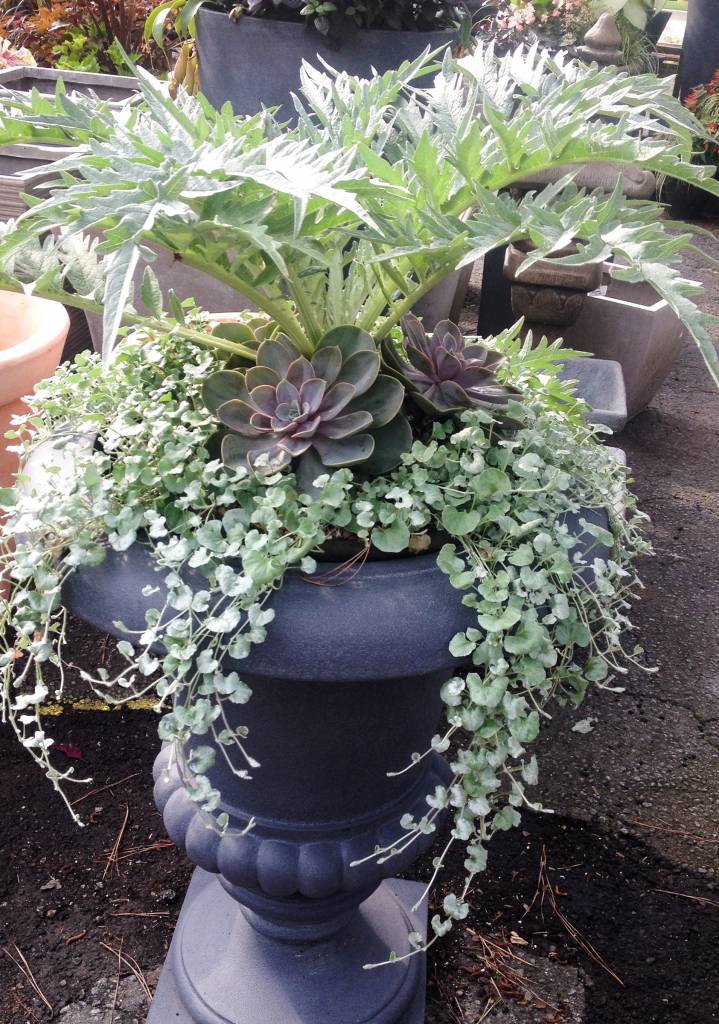
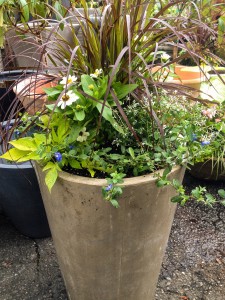 The next uses a red fountain grass for height in a tall planter with the addition of white Profusion zinnias and white euphorbia as fillers. Spilling out are blue daze and potato vine. This planting will bloom continuously with regular water and periodic deadheading or clipping back of the zinnias. Late in the summer the grass will begin to bloom for an end of the season finale.
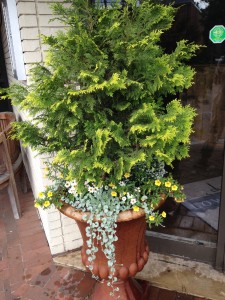 Many of you have pots that have shrubs in them that live year round, and just need some color added each season. In this example, the Chamaecyparis adds yellow foliage and is complimented through the summer with yellow million bells, white narrow leaf zinnias, silver dichondra and some euphorbia. The million bells and zinnias will be cut back when they get too leggy (There’s no need to deadhead each individual bloom on these.) and it will be watered daily, since the Chamaecyparis has been in this planter for a few years and it’s roots are filling the planter quite extensively.
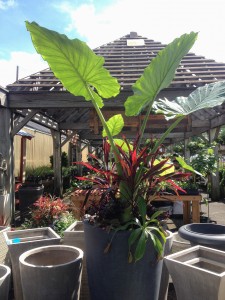 The final planting uses a dramatic, and very large Alocasia – this speaks for itself, though it has supporting players as well, including dracaena, epescia, nepenthes, and alternanthera. It’s quite a combo.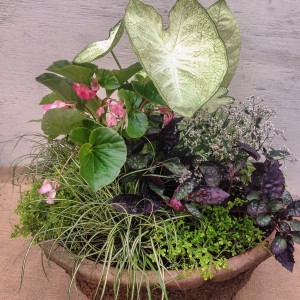
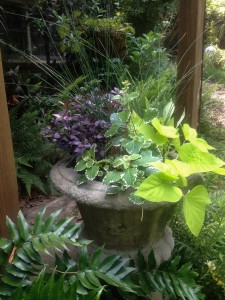
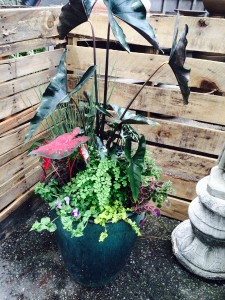 Sometimes it’s fun to try a plant that’s more unusual as the centerpiece of a design. In this glazed pot the dark leaf of the Alocasia is a beautiful contrast to the coleus, grasslike juncus, maidenhair fern, trailing torenia, and creeping jenny.
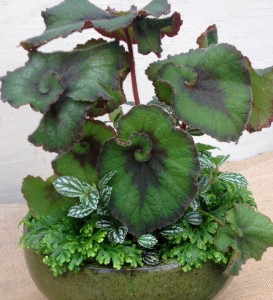
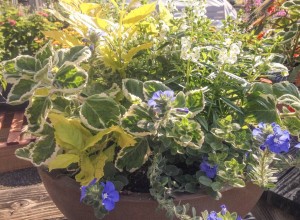
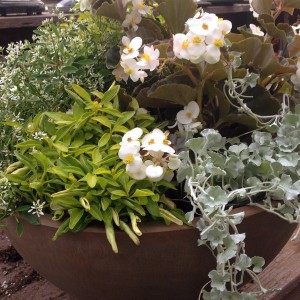
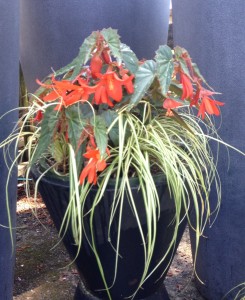 Finally, here’s a simple planting for shade using a begonia and the contrasting leaf and brightness of carex ‘Evergold’, which will spill over the edge of the container. Simple, yet effective. The begonia will continue to bloom with a couple of cutbacks if it gets “leggy.”
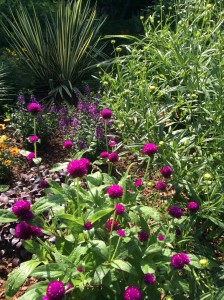
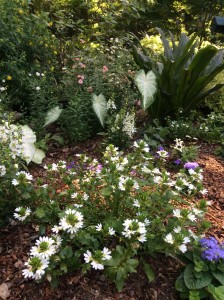
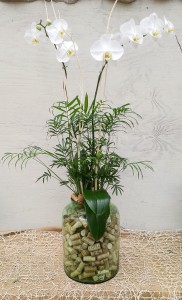
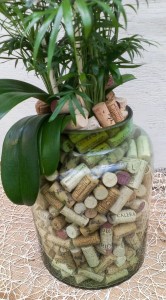
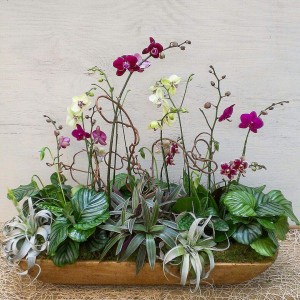
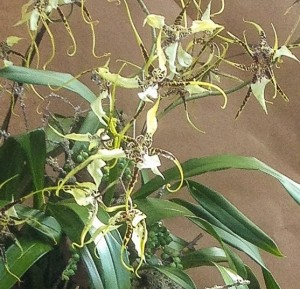
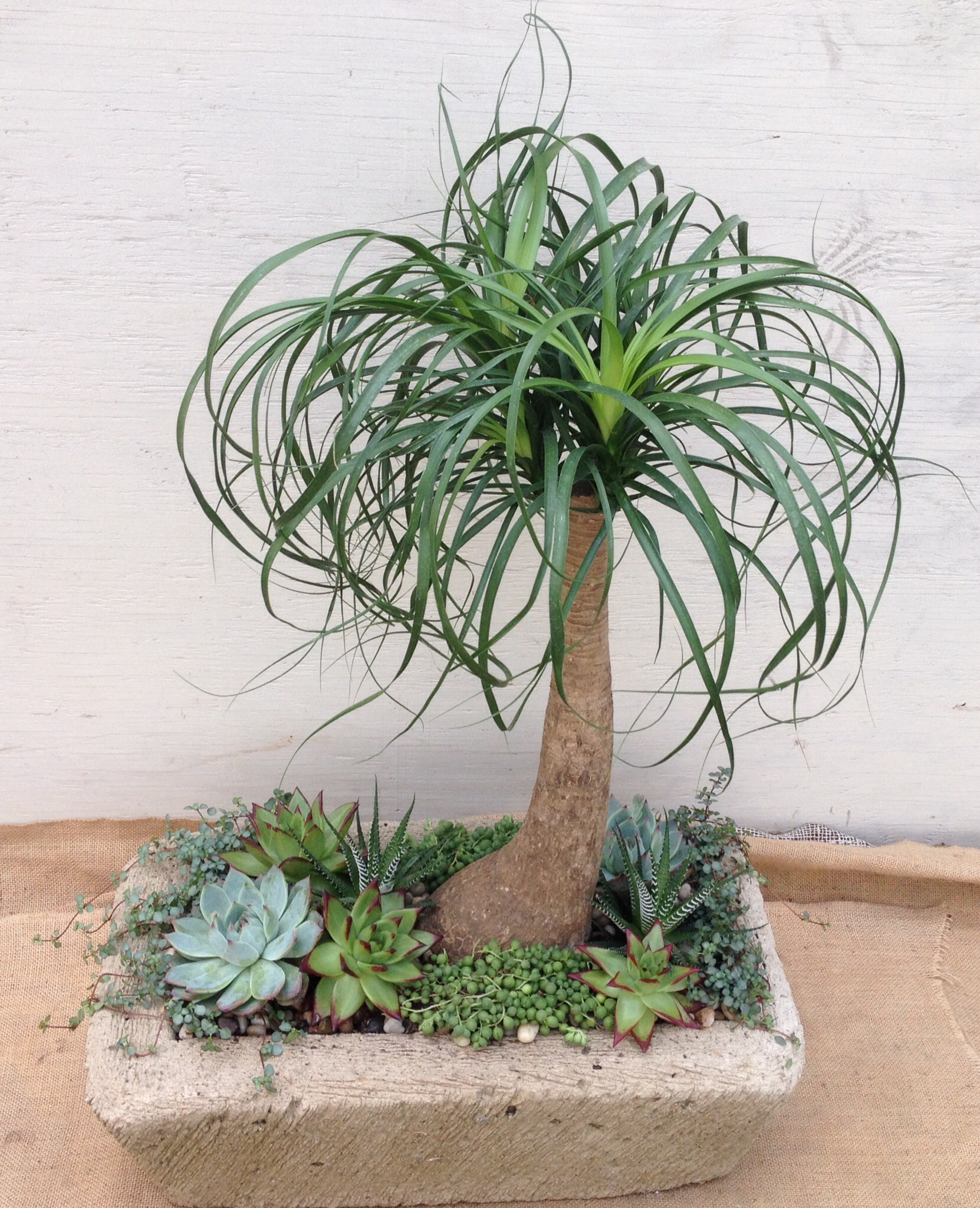
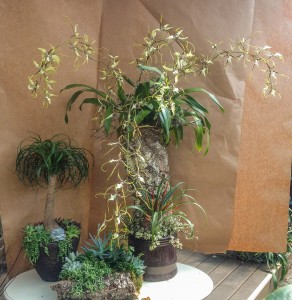 Jamie put together this stunning display the other day at the front of the shop, using a beautiful mix of containers and plants. The picture doesn’t do her designs justice,,,a pony tail palm underplanted with succulents; another succulent planting in cork bark; and a gorgeous arrangement of a standing cork bark planter with brassidium, or spider, orchids.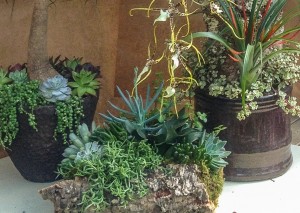
 This closeup picture of the succulent plantings shows both the diversity of this group of plants and why we enjoy working with them so much. In addition to the drought tolerant ponytail palm, there are echeverias, string of pearls, string of bananas, crassulas, and variegated trailing jade plant, all right at home in her design.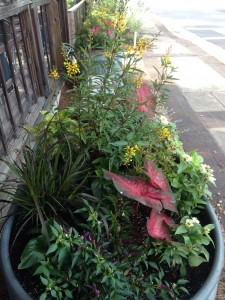
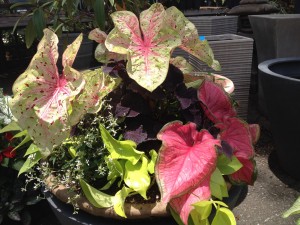
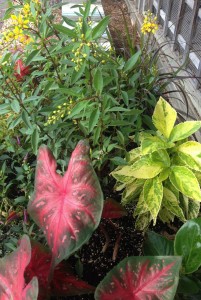 While all caladiums appreciate heat and shade, there are some that can also handle sun, including ‘Red Flash’, the one shown here. These deep red leaves will mingle with the other foliage and flowers, including a copper plant, Acalypha ‘Tahitian Gold’. It was chosen for its yellow foliage to echo the yellow blooms of the thryallis. The acalypha and a red fountain grass will grow up tall, providing a nice backdrop to this composition.
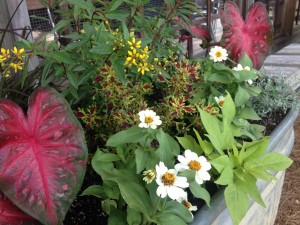 Since it is a restaurant, after all, and ornamental peppers were plentiful in the nursery, those were placed next, just in front of red Dragonwing begonias. Eventually the peppers might be enveloped by the other plants, but until then they’ll contribute their small white flowers and ornamental purple peppers to the mix,
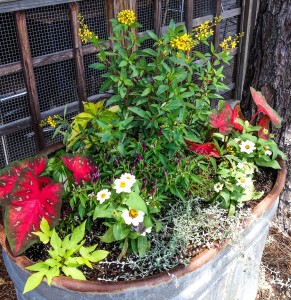 Last, a silver trailing plant. Usually I use silver dichondra for this color because it holds up extremely well in our heat and humidity where so many other silver plants fail. This year, though, I’ve decided to try a new plant…a selection of one that I haven’t had good luck with, but this is supposed to be an improved variety, so we’ll see. It’s a licorice vine, Helichrysum ‘Silver Star’. We’ll keep an eye on this one and hope for the best. It scored high marks in the University of Georgia Athens trial gardens, so I have high hopes!
 A testament to its common name of cast iron plant, the aspidistra looked amazingly good considering the bone-chilling temperatures Birmingham dipped to in January. It only needed a few leaves cut out, and no thinning was required this season…probably due to the cold. A heuchera, that had been added in the
  Torenia is an interesting plant, useful in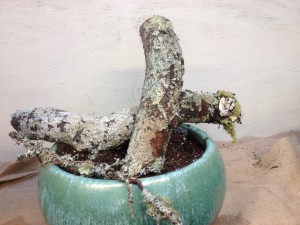
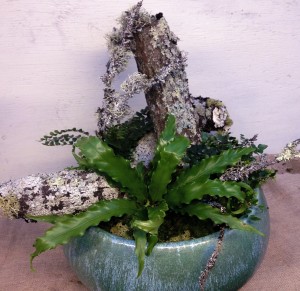
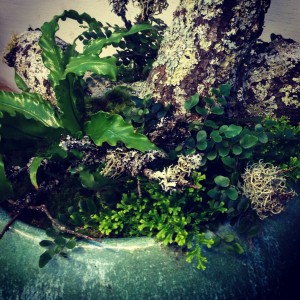
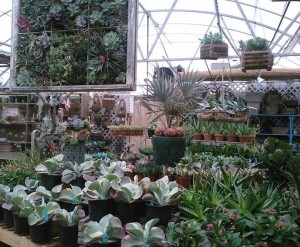
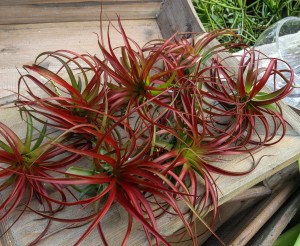

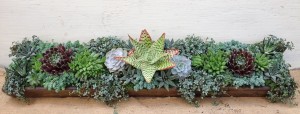 Because succulents, air plants and even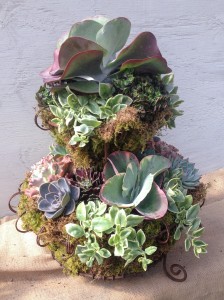
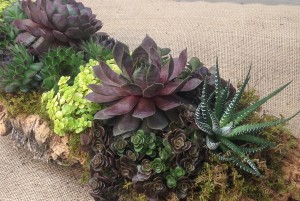
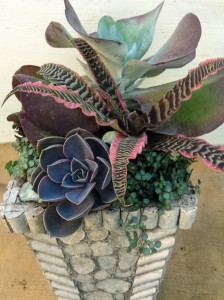
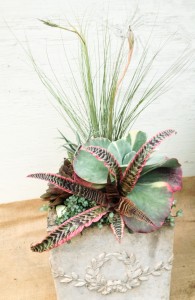
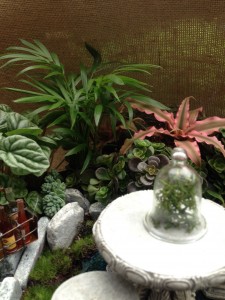
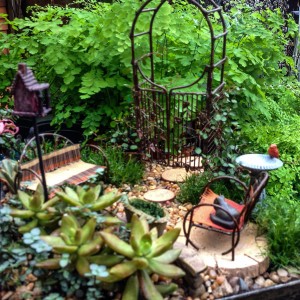
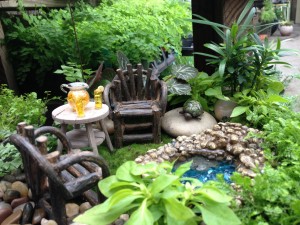
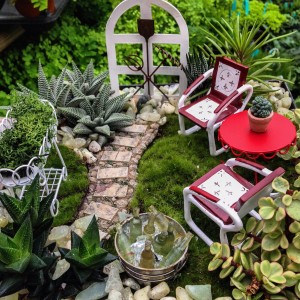 What does all this have to do with miniature gardens, you ask? Well, these tiny gardens have been very popular the past number of years, and the garden club organizers decided it would be a fun thing to have on some of the tables for one of their meetings. And they turned to Oak Street Garden Shop for help.
 Because these take a great deal of time to make, I finally gave up on waiting for new miniature garden accessories I’d ordered since my deadline to have them completed was looming…but I still had plenty of fun things to play with. If you’ve ever made one of these
  Tiny pots of ordinary houseplants also work in these gardens. Little parlor palms, ferns, polka dot plants and baby podocarpus make good companions, and selaginella is a pretty groundcover.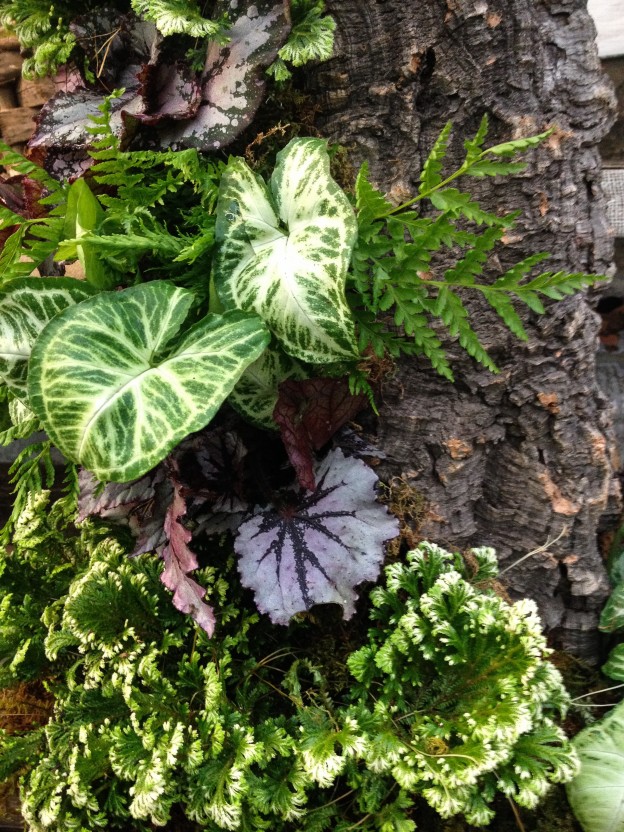
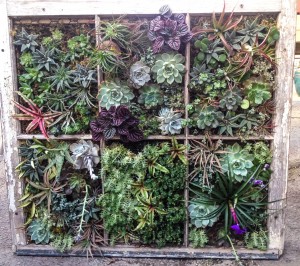
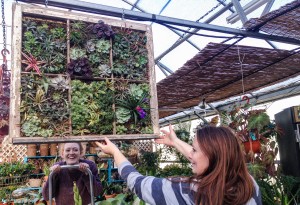
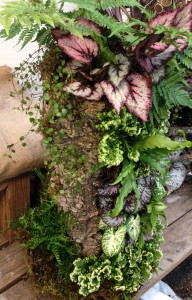 These pieces can be used either horizontally, planting along the top, or vertically, like I’ve designed this one, positioning the plants up the planter. Since it could be unsteady if it didn’t have something to stabilize it at the base, I placed it in a pulp planter that I’d covered with a layer of sheet moss. A plastic saucer underneath will protect the floor during its time indoors, then it can be used without the saucer out in the garden or on a patio, porch or other spot that has some shade.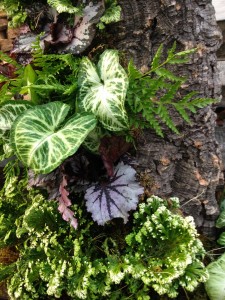
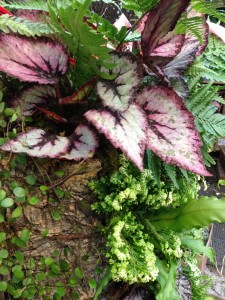 This planting has a variety of houseplants, including nephthytis, used for its lighter green and white foliage, rex begonias for a bit of color, tooth brake ferns and a bird’s nest fern, a new selaginella with white tips called ‘Frosty’, and a large autumn fern in the top with angel vine spilling over the edge with one last, large rex begonia.